The main sensation of the women's padel tour at the Russian Championship 2026 Varvara Dyachenko and Maya Baykova
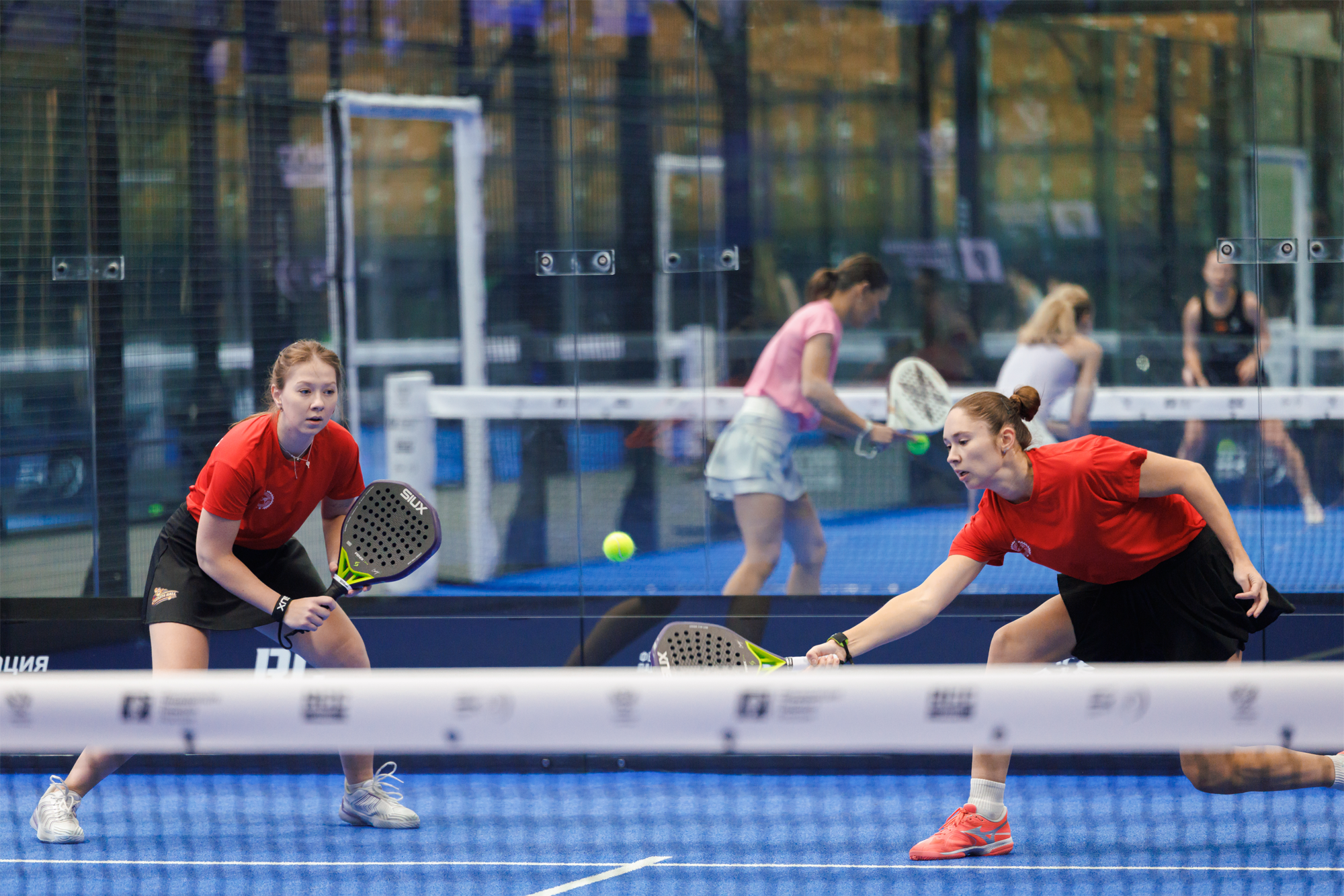
How a pair from Khabarovsk took the fight to the favourites
In an interview with Brainin media, Sergei Dyakonov explained how Varvara Dyachenko and Maya Baykova managed to challenge strong opponents at the Russian Padel Championship in Yekaterinburg. Both athletes live and train in Khabarovsk. Coach Nikita Zverkov worked with them, while Sergei assisted the pair during matches in a coaching capacity. According to him, a tennis background gives Varvara and Maya an edge in volleying, while their ability to adapt quickly during a match helps them handle the pressure.
In the match against Nikitina and Kucheryavaya, the plan was simple – play the ball patiently and give the opponents no easy points. In the third set, Varvara and Maya surrendered their lead, but played a solid tie-break to win the match. In another match, when Greta seized the initiative, the pair began directing the ball towards Alena Vasilyeva more often. This helped relieve the pressure and return to their game.
They have competitive aggression, sporting audacity, which allows them to win
Sergei noted. According to him, working with the pair partly prompted him to launch an academy, one focus of which will be supporting players at tournaments.
Sergei considers establishing themselves on the Russian tour to be the pair's immediate objective. Varvara later told Brainin media that she plans to compete in FIP tournaments, while Maya is still weighing up the possibility.
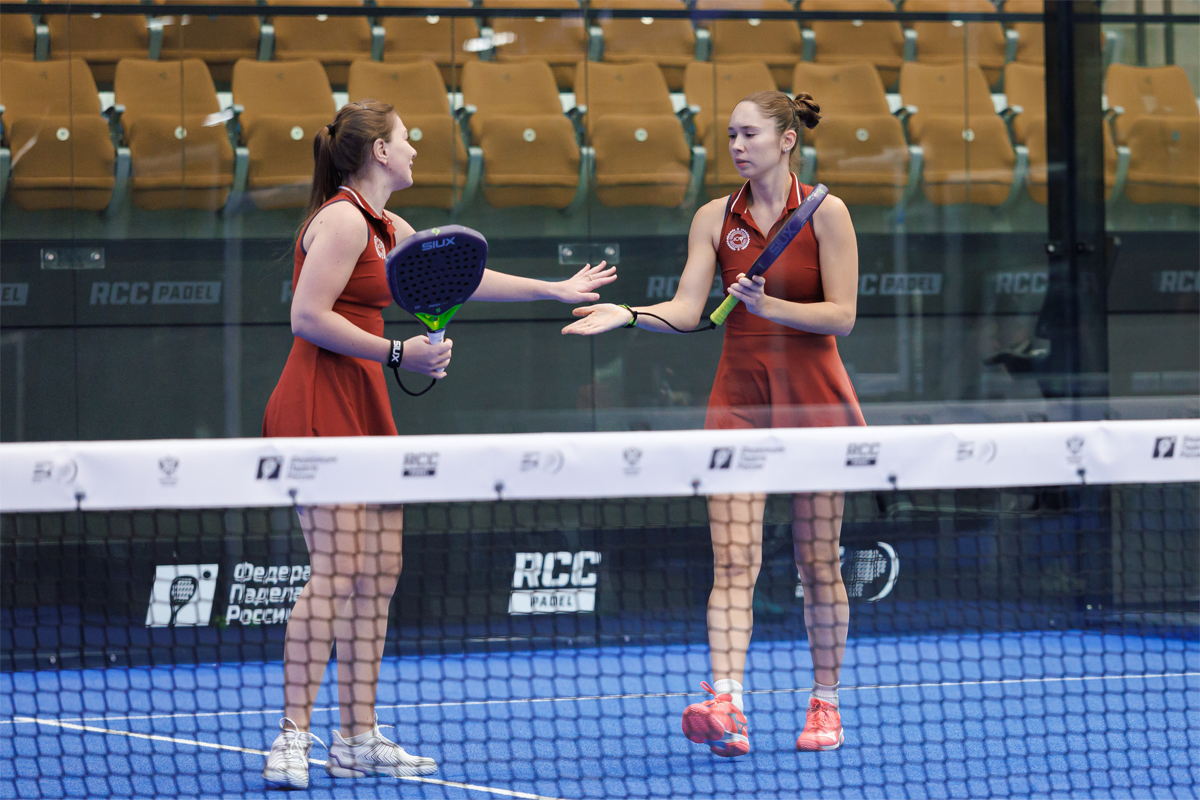
Victoria: I couldn't make it to the RMK Padel Arena in person at that time, so I tuned into the broadcast specifically to watch the girls, because the way they played was really brilliant. Who are they?
Sergei: The girls are from Khabarovsk; they genuinely live and train there. There is actually a very strong padel community there, a lot of passionate people developing the sport. We went there ourselves and ran a tournament. And we travel there from time to time to work. My partner Nikita comes along. Nikita actually stays behind the scenes, Nikita Zverkov, he plays as well. But he does a lot of work outside tournaments, specifically with Varya, for example. And they simply asked me to coach specifically during the match.
We had already done that in Nizhny Novgorod for the first time. On the whole, it turned out well. We won three matches there, lost two, and had a battle with Nikitina/Vasilyeva back then. And here they just asked me to be present during the matches. But we already knew what to do and how to play. And in the end, that was the result.
Victoria: Work in the sense that you travel there as coaches, or how?
Sergei: Well, I don't coach myself. Nikita Zverkov, yes, he came and worked with many people, not just them, but with anyone who asked in Khabarovsk. But since they are athletes and train there, they were also a focus. And I simply work with them specifically during matches. It's just that I feel I can only be useful during matches.
Viktoria: I see, how long have they been playing padel? Talented tennis players who switched to padel, and now they are doing well?
Sergey: Well, just tennis players, I don't know; if they were super-talented, they probably wouldn't have switched and would be playing tennis instead. But just tennis players, a good level; this solid tennis foundation helps them execute certain shots and definitely gives them some advantages in the volley game in padel. Although there is plenty they need to learn and they fall short in many areas, but again, thanks to intelligent play they manage to offset this and cause discomfort for any more skilful opponents.
Viktoria: And is there a feeling that these more accomplished opponents relaxed a bit and didn't expect such resistance?
Sergey: No, I didn't get that impression at all. Well, I don't know whether they relaxed or not, I can't comment on their state of mind. I just clearly see that they had the tools to play with, and we simply exploited their strengths, which they definitely have, everyone has them, you just need to understand what to do on court. And exploit the opponents' weaknesses. Every skilled player has things they don't like doing, moments when they lose their composure, and so on. You just need to know how to exploit that.
Sergey: And the girls' biggest asset is that they have truly learnt to implement this in their game.
Viktoria: So, to listen, understand, and apply.
Sergey: Yes, to listen; that is, they are very good, well done to them, they are very receptive to the advice I give as the match progresses, depending on their condition. It's also important not just to say 'left, right, play from here', but simply to understand what is working for you right now, what isn't working, what isn't working for the opponent, and where to apply pressure, and they make use of that. So, in principle, I'm not surprised by such an outcome, that was the task.
Viktoria: Well, I heard during changeovers, you were telling them regarding Greta that if she is standing at the side, you said don't go. And at some point I got confused, there was a phrase where you were directly prompting them. I think it was about the cross-court shot, right?
Sergey: Regarding this particular match, at a certain point Greta Makrousova seized the initiative significantly, she stopped making errors altogether, applied pressure, and caused maximum trouble. We actually tried to shift the play away from her, and it worked.
Viktoria: Right, you redirected more towards Alena, didn't you?
Sergey: Certain balls, yes, because she plays with high pressure very well, and the girls felt uncomfortable defending. But they listen to these points during changeovers, and they don't suffer prolonged slumps because of that, I believe. That is, you can play great, but if you don't change anything when you're losing, you end up with scores like 2-6, 1-6. Whereas with them, even when they suffered a dip, it lasted no more than two games. That was the case throughout the entire tournament, which is why all their matches were without straightforward scorelines.
Viktoria: The right-hand box, the girl's name is... Varvara. Varvara tried somehow, I don't know, to play diagonally off the backhand, and the commentator talked a lot about that, wondering what on earth it was, whether it was some attempt at a signature shot or something, but it just wasn't coming off for her.
Sergey: Cross-court from the first one, meaning to the right to Alyona Vasilyeva, right? Yes. Well, there was a moment—that's also an element of tactics—when there was pressure on her, so rather than switching play to the rushing Makrousova, one could simply play it calmly to Vasilyeva to give yourself a breather, yes, or vice versa, when she attacks, she can attack both there and... Meaning both into the right and left box. In general, overall, they play on the attack very much in a men's style, I would say, which is good.
Sergey: I understand their game well, and I feel like I play that way myself sometimes. And they listen to me, and, overall, the main thing is that they... They have a solid attacking repertoire, which allows them to play so well. Even against super-strong opponents.
Viktoriya: And what about the match they played against Nikitina? The first one, which was probably the second. I watched a bit over there, they were right over on those distant courts. I was watching there, they were playing right past Zugumov.
Sergey: There, too, the main thing was that they stepped out and didn't let their nerves get the better of them. Over the course of the match, after the first or second game, it became clear that if they didn't rush and didn't give away easy balls, everything would be fine, rallies would get going, and the psychological pressure would be on Darya and Ekaterina. That is generally how it turned out; they weren't able to find their best game in that match. The girls initially didn't capitalise on their advantage in the third set, got overly nervous, and couldn't close it out.
Then, on the contrary, Nikitina and Kucheryavaya should have closed it out and won the match, but as it happened, they surged back and played a super-confident tie-break. That is, once again, this crucial aspect: the ability to win at the right moment and close it out. That didn't happen there at first, but then they won. That was precisely the case in the subsequent matches. In the next two tough ones, as it turns out, and they managed to pull it off.
Viktoriya: Well, great. You are currently coaching at matches. Your academy is developing now, as I understand, right?
Sergey: We've only just started; this is one of the directions that we will, naturally, pursue: coaching players, mentoring players, training players. It's interesting, we know how to do it, being players ourselves. I don't coach there at the academy myself, but I will participate in training sessions as a player. And naturally, in terms of match coaching, I'm good at it, I understand it, and I think we will be of value.
Viktoriya: Will the girls be part of this project, as your charges?
Sergey: Well, they sort of are already, yes. That is, we collaborate with them, naturally, yes.
Viktoriya: That's a very good case study. In terms of PR, it's fantastic. I think you need to make the most of this, if they don't mind.
Sergey: We certainly will. They are already reposting it. That's partly where this idea for the Academy came from, because I realised that it's viable, we can definitely be of value to players, and there is a lack of that. There are only a few clubs there that genuinely develop the competitive sport side, whilst the rest of the players are left to their own devices. I'm a player on my own, no one coaches me; that's not always—sometimes it helps, it doesn't distract, but sometimes, on the contrary, you want someone to offer you guidance.
I believe that if you give sound advice, don't pressure the player, don't literally try to teach them how to play, then they open up on their own and everything works out.
Viktoriya: As an amateur, I went into my first RPF-40, and I was lucky that my coach came along and coached me; he coached all three matches, and I truly felt it as an absolute beginner at this. If you just obey like a dog when you are being trained, and do as he says, it works. It was precisely because of this that we put up a fight, although—I don’t know whether you know or not—I am a complete novice in padel.
Yes, and I felt that I could do something, not just that I was, you know, clumsy and all over the place, but that I could simply because there is a competent manager—as I always say, a coach is a manager, and he directs you. And that is just incredibly cool.
Sergey: Yes, coaches still vary, obviously; you probably shouldn't obey blindly, but if you trust your coach, it is worth…
Viktoriya: If his instructions and help are helping you, then it feels like it is worth listening.
Sergey: Yes. In other words, that is also a question of the coach, since it is, essentially, also a profession. A person cannot be a coach simply because they called themselves a coach. That is, I simply look for the strengths in each player, specifically in Varya and Maya, and I simply taught them to use that, and during the same match to exploit the weaknesses in others. That turns out to be enough to already put up a fight. After that, you already need to win, which we can always do. That does not depend on you. But you can definitely put up a fight that way.
Viktoriya: Now everyone is waiting for the Finals tournament in December, and they will be afraid of the girls there now, too.
Sergey: I don't think they will get in, though. I think not. This is only their third, fourth, fifth tournament. It seems to me they won't have enough points to reach the Finals. But next year there are already the major tournaments, the RPT, if they continue playing together. Well yes, that will already be a serious pair for whom opponents will prepare differently. Well, on the whole, people were already preparing for them here, after Nikitina and Kucheryavaya.
In other words, it doesn't bother them; they have that competitive edge, that competitive audacity that allows them to win.
Viktoriya: Yes, by the way, they don't hide their emotions; if everything is working out, all the more credit to them for that.
Sergey: Yes, and they have learned—it is greatly to their credit—that they aren't afraid. Secondly, they respect their opponents, definitely. That is, they do—do not think that they are better than everyone there, but they definitely know that they cannot win. And as a team we look for these openings so that it works out in the match.
Viktoriya: Well, it's as if you can see this charge of energy and motivation in the players. Well, let's put it this way, watching the matches of our Russian padel athletes all year, I can see that those players who come out pumped up, with this kind of energy, they sit like this during changeovers, just itching to play. And 9 times out of 10, from observations, they are the ones who win.
Whereas those who are on a bit of an emotional dip, it's like both hard work for them, and something helps, something doesn't, but it's really tough. That's my personal observation, that the energy and mindset are very important.
Sergey: Mindset, being in the game, thinking about nothing, trying your absolute best. The easiest things are usually the hardest. Being attentive, focused throughout the match, not thinking that they will just hand you the match. That is difficult. That is what a coach helps with, I think.
Viktoria: Are the girls planning to compete in FIP? Do you know, or not?
As Varvara herself commented later, she definitely plans to travel for FIP events, while Maya is still considering it.
Sergey: I don't know. That I can't say.
Viktoria: That has to be taken up with them. Because it feels like something we would love to see.
Sergey: Probably. Right now, the main thing is to establish themselves firmly on the Russian tour. So that it isn't a one-off result. That is also difficult. The next tournaments will already be different. I went through that myself as well. You have to maintain your level. That's a different task altogether.
Viktoria: Everyone will get used to them.
Sergey: They will know how to play against them. They will also need to change things up.
Viktoria: Well, speaking of the girls, and women's padel in general, women are often very quiet. The fact that they aren't shy about showing emotion is probably great, because when spectators come, that is precisely what they want to get: that high intensity, genuine emotions, mutual support, whereas when our girls play, it often happens in silence—great, but in silence.
It feels like that is exactly what the spectators want. Bread and circuses.
Sergey: Yes. Today, yes, I felt that all the matches were extremely tense, and because of that they turned out very spectacular, with plenty of emotion. That is great, of course, and as a coach you get fired up yourself. I was shouting to them as well: well done.
Viktoria: Yes, I heard that, even the commentator noted that you were really firing them up, seeing them off, that Sergey was following right behind them onto the court. Did you feel the urge to step out there with them and battle it out?
Sergey: No :)
Viktoria: Brilliant, thank you very much.
Sergey: Thank you.
Author: Viktoria Braynin