The first RPF 40 tournament: how ranking padel competitions take place and why it is worth trying
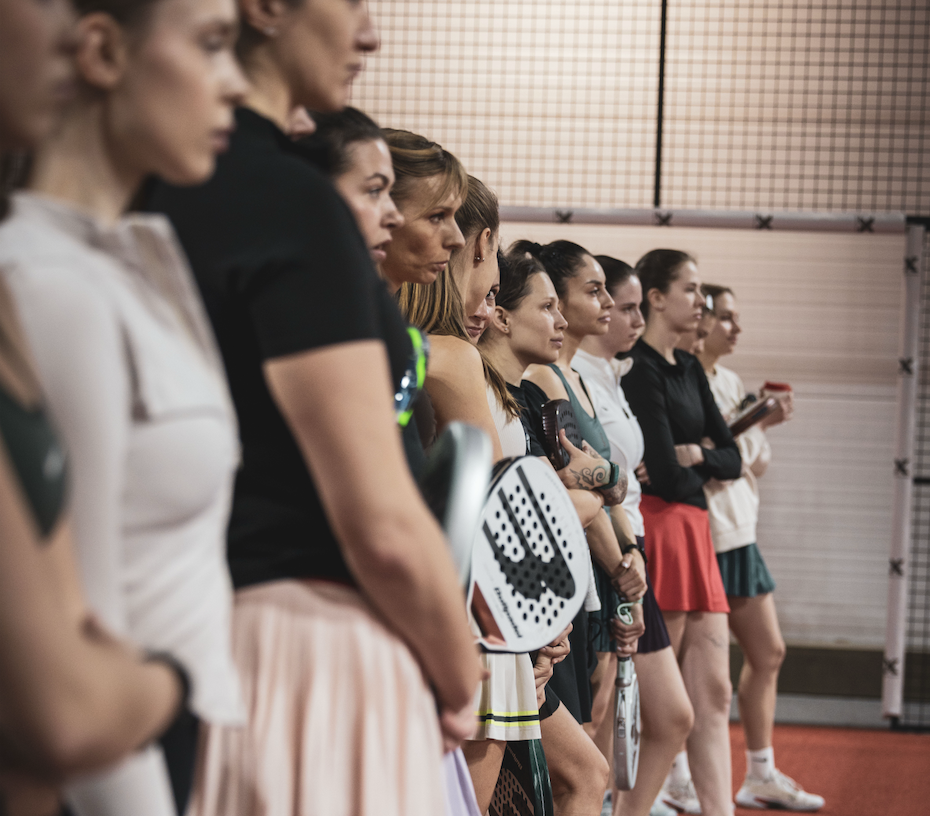
How do official Russian Padel Federation tournaments differ from familiar amateur competitions, how do you register, earn your first ranking points, and what can you expect on court? I share my personal experience of taking part in RPF 40, my impressions, and takeaways after six full sets.
My first RPF tournament has finally taken place, and I am ready to share impressions, emotions, and takeaways. I will talk not only about how my matches went, but also about the technical nuances of participation that anyone deciding to test their mettle in official competitions will face.
How do RPF tournaments differ from ordinary amateur events?
Let us start with the essentials. What is the fundamental difference between an RPF tournament and familiar amateur competitions, for example at "Lunda"?
Firstly, it is the match format. In official competitions, matches are played by sets. Yes, Round Robin tournaments where pairs play a set starting from 2:2 are currently gaining popularity, but, in my view, that is a completely different experience.
Secondly, at RPF tournaments, you are no longer playing for an in-app rating, but for points that count towards the official Russian Padel Federation rankings. And that is an entirely different motivation.
I was lucky to start with the lowest-ranked tournament, RPF 40. At the same time, each of our matches consisted of two full sets, and if the sets were tied, the winner was decided in a deciding tie-break. By comparison, even at RPF 100, two full sets are not always played.
The competition was played under an Olympic system with classification play-offs. As a result, each pair played at least three matches. In my case, it meant six full sets and three tie-breaks. My partner and I fought right down to the last ball.
What playing level is needed to enter RPF 40?
One of the questions that undoubtedly concerns beginner participants is: how well do you need to play to enter an official tournament?
Today, my rating at "Lunda" stands at 3.2. I believe this is a fairly objective assessment of my level, roughly up to 3.5.
To reach level four, I still lack sharpness, shot power, and a high-quality attack. Moreover, I realise that further progression requires not so much extra hours on court, but serious physical conditioning, recovery, and work on muscle mobility and flexibility.
For example, we are currently working on mobility limitations and muscular tightness that prevent me from executing a full smash. Among other things, attention is being paid to the serratus anterior muscle and shoulder girdle function.
As for the opponents, almost all the women at the tournament had higher ratings than mine, predominantly level 4+. I think only one participant had a lower rating than me.
Yet that is precisely where I see the value of competition. Playing against stronger opponents shows very quickly what you truly need to work on.
How to register for an RPF tournament: documents, insurance, and entry
Now a little about the technical side of taking part. In truth, there is nothing complicated about it, but it is better to prepare in advance.
To register, both you and your partner must have accounts on the Russian Padel Federation website.
In addition to registration, you will need a medical certificate confirming clearance to compete based on health status.
By the way, the doctor who issued my medical certificate was very surprised by the word "padel". So after my visit, there was one more healthcare professional familiar with our sport. Naturally, I tried to tell her as much about padel as possible :)
Along with the medical certificate, it is necessary to take out sports insurance.
For me, it took literally 2–3 minutes in the Sber app. I decided not to buy a policy for an extended period and insured myself only for the day of the competition. The cost was 24 roubles.
However, since I am now training daily, I am already thinking about arranging insurance for a longer period.
The main thing is that the policy meets the requirements of the specific tournament.
What is seeding and why does entry not guarantee participation?
After submitting an entry, athletes are placed on a preliminary entry list, which takes their ranking points into account.
This is where the concept of "seeded players" comes in. These are participants who occupy specific positions on the list depending on their ranking.
If you have zero points, you end up at the bottom of the list. And if there are many applicants while the number of places is limited, there is a chance of not making the main draw at all.
At the same time, the organisers have the option to grant a wild card, or special invitation, to a particular pair.
I was lucky: my partner already had enough ranking points, so we were the sixth-seeded pair of the tournament.
A day before the competition, the organiser contacted the participants on Telegram, sent a payment link, and further verified compliance with the regulations.
For example, athletes holding the titles of Candidate Master of Sports (CMS) and Master of Sports (MS) in tennis were not allowed to compete in our RPF 40.
On the eve of the tournament, the draw took place. The organisers published the tournament bracket, which made it clear who was playing whom, what time the match started, and on which court.
Our first match began straight from the quarter-finals. In this respect, you could say I was lucky, as even in the event of a defeat, we could already count on ranking points. With a different draw and an exit after the first match, the outcome could have been entirely different.
First tournament: six sets, three tie-breaks and a fight to the final ball
On the day of the competition, I arrived early to prepare calmly and warm up properly.
The organisation was a pleasant surprise. The matches started virtually without delay, and each participant received a starter pack: a personalised bottle of water, energy and isotonic drinks, a towel, and stickers.
A small touch, but a nice one. Especially when you realise that the organisers paid attention to such details.
First match: adapting to the court and tough opponents
Result: 0:6, 1:6
The first match proved difficult.
The club had rather low ceilings, whereas I had spent the entire previous week training on high-ceiling courts. Therefore, our first set was practically spent adapting.
Our opponents were very strong, women with a tennis background. They gave us virtually no opportunity to use the glass, played fast, and kept applying pressure.
It was particularly tough at 40:40. We could not convert the deciding points, and that had a big impact on the result.
By the second set, my coach arrived to support us. And once again, I realised just how useful coaching is during a match.
From the sidelines, the coach sees what you do not always notice on court. During changeovers, he advised which opportunities could be used, where to change tactics, and how best to play against specific opponents.
We tried to implement his recommendations, although we were no longer able to turn the match around.
Second match: the first truly tense tie-break
Result: 6:7 (5:7), 6:4, 8:10
In the second match, the game became completely different.
We had already adapted to the conditions, started to get a better feel for the court, and thanks to patience and the coach's advice, were able to put up a serious fight against our opponents.
We dropped the first set on a tie-break 5:7, but took the second 6:4.
Everything was decided in a champions' tie-break, which we lost 8:10.
Yes, another defeat. But it felt like a completely different brand of padel compared to the first match. We were no longer merely trying to cope with the pressure, but genuinely fighting for the win.
Third match: when everyone had already left, but we were still playing
Result: 4:6, 6:3, 8:10
The third match turned out to be the longest.
By that point, the other participants had already attended the medal ceremony, packed up, and left, while we were still on court.
We lost the first set 4:6, won the second 6:3, and once again reached a deciding tie-break.
And once again, 8:10.
Of course, we wanted to win at least one match. Especially when you stop literally two points away from victory twice.
But I am glad that my partner and I did not give up and kept fighting until the end. It is precisely in matches like these that you begin to realise how important not only technique and physical conditioning are, but mental resilience as well.
What did my first ranking tournament give me?
After six sets, I gained far more information about my game than I had expected.
The weak spots became obvious: insufficiently aggressive attacking, a lack of sharpness, difficulties playing under pressure and converting crucial points.
At the same time, I also saw our strengths. We know how to fight, adapt during the match, and not let our heads drop even after an unsuccessful first set.
A separate takeaway concerns physical fitness. When you play several full matches in a row, it becomes obvious how important stamina, speed, recovery, and the ability to maintain shot quality throughout the entire match really are.
That is precisely why I am now paying more and more attention not only to technical drills on court, but also to general physical conditioning.
Should amateurs compete in RPF tournaments?
I believe that it is definitely worth it.
Of course, everyone chooses their own path in padel. For some, it is enough to play americano, meet friends on court, and simply enjoy the process.
I chose a different path for myself. I am interested in developing specifically as an athlete, competing in official tournaments, earning ranking points, and gradually raising my level of play.
That is precisely why the standard amateur tournament format is no longer enough for me.
But this by no means means that you should only come to RPF events once you have learned to play perfectly.
On the contrary, taking part in competitions helps you assess your level more objectively, identify mistakes, and understand where to go next.
If you have long been eyeing ranking tournaments, but doubt your abilities, try starting with an RPF 40, having first checked the eligibility requirements and regulations.
You do not necessarily have to win your very first tournament. Sometimes it is much more important simply to step onto the court, gain this experience, and stop fearing opponents who are stronger than you.
My first RPF ended in three defeats, but I do not regret a single match played. Now I have a clear understanding of what to work on, and even more motivation to continue training.
I am sure that ahead lie both first victories and new ranking points.
In the meantime, I wish everyone success in padel. See you at the tournaments!
Author: Viktoria Braynin